When the Business You Built Is No Longer the Hard Part
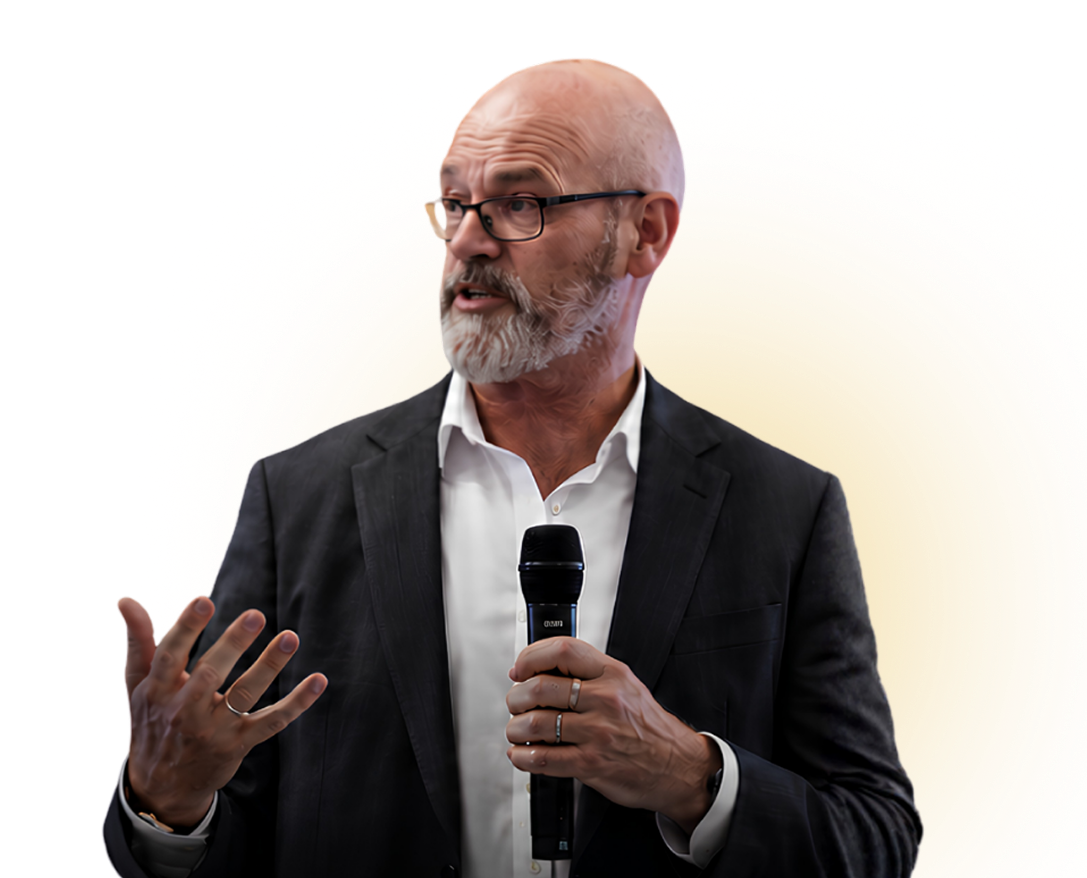
By Ash Playsted
Principal Advisor, AP Advisor
THE FOUNDERS BRIEF
Edition 5
The Founder's Second Game
There is a founder problem that rarely gets discussed with enough honesty.
It tends to appear after the hard years. After the fragile years. After the years when survival itself was the victory.
It shows up later, when the business is established, the economics work, the team is in place, and the market knows the name.
In mortgage broking, it often looks like this: a respected brand, a meaningful trail book, a steady flow of settlements, solid lender relationships, recurring cash flow, a capable team, and a reputation that took years to build.
By any conventional measure, the founder has done it. They built a successful brokerage.
And that is precisely where the next problem begins.
Not because the business is broken.
Not because growth has stalled.
Not because the founder has suddenly lost ambition.
The problem is subtler than that.
It is the realization that the business they built to challenge themselves, to prove themselves, to create something meaningful, is no longer asking the same question of them.
The first game was clear.
Build the firm.
Build the brand.
Build the team.
Build the economics.
Build the reputation.
Build something that matters.
For years, the scoreboard is obvious. Revenue. Settlements. Trail. Profit. Headcount. Market standing. Awards. Growth.
The founder knows what the game is, and they know how to play it.
But once a brokerage reaches a certain level of substance, the real question changes.
It is no longer simply, How do I keep growing?
It becomes something more consequential:
What is the highest-value next chapter for this business, my capital, and my role in both?
That is not a growth question in the usual sense. It is an ownership question. A capital question. A relevance question. In many cases, a life question.
And it is the question many successful founders put off for too long.
Not because they lack sophistication. Quite the opposite. Often these are highly capable, elite level operators who know exactly how to keep producing. They know how to recruit, how to lead, how to convert, how to win business, and how to navigate the complexity of a maturing brokerage. If they want another record year, they can probably go and get one.
Another hire is available.
Another office is possible.
Another three years of solid growth is entirely plausible.
But that does not mean it is the most intelligent answer.
This Is The Point That Matters
At a certain stage, a mortgage brokerage ceases to be just a business the founder operates. It becomes an asset the founder must learn to architect.
That distinction changes everything.
An operating business can generate a strong income.
A strategically designed asset can do much more than that.
It can create liquidity without requiring a total exit.
It can support a partial sale while preserving future upside.
It can attract the right strategic partner or capital partner without forcing the founder to surrender control of the next chapter.
It can allow the founder to move from day-to-day operator into a more strategic, higher-value role.
It can become the cornerstone of a broader platform, rather than remaining a single enterprise whose only endpoint is a one-time sale.
That is where the conversation gets more interesting, and far more important.
Because many founders still think the options are binary.
Keep grinding, or sell.
Stay in the trenches, or hand over the keys.
That is a poor description of the actual landscape.
The most sophisticated founders understand there is a third path, and often a fourth and fifth. They understand that succession is not the same as retirement. They understand that a transaction does not have to mean disappearance. They understand that the objective is not simply to “exit.” It is to reposition.
Reposition the business.
Reposition the founder’s role.
Reposition the capital.
Reposition the next decade.
That could mean taking some liquidity off the table while retaining meaningful equity.
It could mean bringing in a partner who can help the enterprise reach a scale it was unlikely to reach alone.
It could mean reducing founder dependency so the business becomes genuinely transferable.
It could mean building a leadership bench strong enough to carry the firm without the founder acting as the bottleneck, rainmaker, fixer, and final decision-maker all at once.
It could mean turning one excellent brokerage into the foundation for a broader platform strategy, rather than treating it as a successful but ultimately finite operating business.
For Some Founders This Is Energizing. For Others, It Is Deeply Uncomfortable.
Because once you begin asking what the business should now do for you, you are no longer talking only about growth. You are talking about identity, relevance, timing, risk, and what a worthwhile next chapter actually looks like.
That is where the founder conundrum sits.
Most founders did not get into business because they wanted to one day become passive investors in their own life. They got into business because they are wired for challenge. They are driven by progress, by competition, by the satisfaction of building something difficult. They want to matter. They want to stay sharp. They want to remain in the arena.
So when the business matures and the obvious challenge fades, many do not know how to interpret the discomfort that follows.
It is not necessarily burnout.
It is not always boredom.
And it is rarely a simple desire to “retire.”
More often, it is the sensation that the old game is no longer enough, but the next one has not yet been designed.
That is why I have increasingly come to believe that the right conversation is not exit planning in the narrow sense. It is master planning.
Because the issue for a successful founder is not merely, How do I leave?
It is, How do I think coherently about the next decade of this business, my capital, my family, my role, and my relevance?
That is a much better question.
It forces a founder to think about transferability, not just profitability.
About enterprise value, not just annual income.
About timing, not just effort.
About ownership design, leadership succession, personal optionality, and capital security.
In mortgage broking, this matters more than most founders appreciate.
There is a cohort of brokerage founders in Australia who have already built valuable businesses. They have built them through persistence, commercial instinct, lender relationships, referral ecosystems, leadership endurance, and years of operating under pressure. Many now own firms with meaningful recurring revenue and real strategic value.
But not all of those firms are genuinely transferable.
Not all are ready for a sophisticated transaction.
Not all have leadership teams capable of carrying the business without founder intervention.
Not all have reduced enough key-person risk to create real optionality.
Not all have thought carefully about how much of the founder’s wealth remains concentrated inside one operating business.
Not all have decided whether the next chapter should be continued growth, partial liquidity, recapitalization, acquisition, partnership, or something more ambitious altogether.
That is the work now.
Not another incremental productivity sprint.
Not another year of respectable growth by inertia.
Not another cycle of “just push harder.”
The real work is to pause long enough to ask harder questions.
If this brokerage is now a serious asset, how do I make it more transferable?
If I still want upside, how do I retain the right economics?
If I want optionality, what has to change before I truly have it?
If I want a strategic partner one day, would the business stand up to real diligence?
If I want to move into a chairman, investor, or platform role, what needs to be built beneath me first?
If I am not ready to sell, fair enough, but what exactly am I building toward from here?
Those are not end-of-career questions. They are owner-level questions.
And the founders who answer them well tend to build wealth differently from everyone else.
They understand the difference between income and enterprise value.
They know when to de-risk and when to lean in.
They know that the right partner can accelerate the journey rather than dilute it.
They know that a well-structured transaction is not necessarily the end of the story. In many cases, it is the start of a more valuable one.
That Is The Next Great Dividing Line In Mortgage Broking.
The next decade will not belong only to the founders who grow the fastest. It will belong to the founders who know how to convert a successful brokerage into a strategic asset with options.
The founders who know how to professionalize before they are forced to.
The founders who know how to create transferability before they need it.
The founders who know how to take some liquidity without giving away the future.
The founders who understand when to remain in the operator’s seat, and when the more valuable move is to change seats altogether.
Because once you have built a great brokerage, the challenge is no longer proving that you can build one.
The challenge is deciding what that business should now do for you.
For your capital.
For your family.
For your freedom.
For your relevance.
For the next chapter of your life.
That is the founder problem almost nobody talks about.
And it is exactly why succession planning, or better still master planning, belongs far earlier in the conversation than most founders think.
Not because the end is near.
Because the next chapter deserves to be designed with the same seriousness as the first.
Ash Playsted
Principal Advisor | AP Advisory
Private Strategic Office
Experienced Counsel for Founders